
Due to potentially damaging weather this afternoon and evening, the children’s musical and pre-show events in the Leawood Sanctuary have been cancelled and will be rescheduled.
Scheduled programming has resumed for Thursday, February 13 at all Resurrection locations.

The Love in Action journal gives you a daily challenge and space to reflect on how you lived it out. CLICK HERE to download it and put love into action all month long.
My brothers and sisters, when you show favoritism you deny the faithfulness of our Lord Jesus Christ, who has been resurrected in glory. Imagine two people coming into your meeting. One has a gold ring and fine clothes, while the other is poor, dressed in filthy rags. Then suppose that you were to take special notice of the one wearing fine clothes, saying, “Here’s an excellent place. Sit here.” But to the poor person you say, “Stand over there”; or, “Here, sit at my feet.” Wouldn’t you have shown favoritism among yourselves and become evil-minded judges? My dear brothers and sisters, listen! Hasn’t God chosen those who are poor by worldly standards to be rich in terms of faith? Hasn’t God chosen the poor as heirs of the kingdom he has promised to those who love him?
James was writing to early Christians scattered across the region, and from the way he wrote, many of them seem to have had little money or status. He wanted them to understand that believing in Jesus should change the way they treated one another, so he painted a picture they would have recognized.
Two people walked into their gathering. One wore a gold ring and fine clothes. The other was poor and dressed in filthy rags. Nobody knew anything else about either of them yet. The man with the ring was shown to a good seat. The poor man was told to stand off to the side or sit on the floor.
It probably didn’t feel like a big decision in the moment. In the Roman world, a wealthy visitor could bring money, connections, and influence, and giving him the best seat might have seemed smart and polite. James saw it differently. He said that when they treated people differently based on what they could see, they had become judges with evil motives, and they denied the faithfulness of Jesus himself.
Then James reminded them how God sees. God had chosen the poor, he wrote, to be rich in faith and to inherit the kingdom. The man they sent to the floor was the one God had already welcomed.
James was saying that the way we treat people shows what we believe about Jesus. We still size people up quickly, by their clothes, their car, their job title, the way they talk, sometimes even their politics. We make up our minds before they say a word. We’re called to see past first impressions and treat everyone who walks through the door as someone God has already chosen.
God, you see every person who walks through the door as someone you love. Help me notice when I’ve made up my mind about someone too quickly. When I meet someone new this week, help me slow down and get to know them before I decide who they are. Teach me to offer the same welcome to everyone, the way you have welcomed me. Amen.
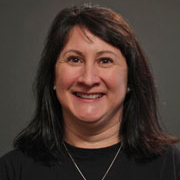
Denise Mersmann serves as the Care & Prayer Coordination Director at Resurrection.
It’s so easy to judge.
We judge people by their clothes, cars, jobs, appearance, the size of their homes, their kid’s ACT scores and athletic abilities. The list is long and seems to be getting longer all the time.
Based on our assessments we decide who we think is worthy. From those appraisals we select the people that we want to be friends with, work alongside, and include in our social circles.
To be fair this type of critical assessment isn’t anything new. However, as society has expanded globally and technology has advanced, social media is now the arbitrator of what is good and who is worthy. Now the stakes are much higher.
Suddenly, my random unjustified opinion isn’t private. My thoughts are not just something I may tell a friend or consider when I make an invite list for a party. These thoughts can now very easily be shared with thousands of people, many whom I don’t know or who might not have any context for the sentiment I am sharing. The person who I randomly diss may see and notice that 100 people liked it. They experience, in real time, and in the isolation of the digital venue, that first that I said it and secondly, that a lot of other people supported it.
So, what does it matter? Really does it matter? I believe that it matters a great deal, more than we want to acknowledge. You see at a time when so many people are struggling with mental health issues, seeing a public critique of some part of themselves can be devastating.
In addition, those public criticisms are random and rarely for the kind of things that really matter.
If I am overweight, but I love God and His people, care for others and want the best for those around me, does the size of my jeans offset all that? If my child is not an elite athlete, but they treat their friends well, work hard, respect other people and love their neighbor, are they somehow less than a kid who can run faster?
No and no. I am not less because of my size, my kid is not less worthy of love and friendship because someone is faster or stronger. Yet we let those assessments undermine our self-worth. If we attend to social media and actually believe what people write our confidence plummets and we begin to look at ourselves differently. We pull back from social situations and begin to wonder if we are enough.
In a time where loneliness is epidemic, rather than being inclusive and seeing people as God sees them, we are adding to the problem by instilling doubt in their worth. We cause them to question if they have something to offer. That isn’t OK and we have to do better.
This month as we love our neighbor and put our love into action, let’s look for the best – God’s version – of everyone we meet. And then take a minute to tell them what we admire most about them rather than posting where we have found fault.
I guarantee if you put this into action, you will find a lot more to love about those around you and yourself! It really is much easier to love than judge!
