
Due to potentially damaging weather this afternoon and evening, the children’s musical and pre-show events in the Leawood Sanctuary have been cancelled and will be rescheduled.
Scheduled programming has resumed for Thursday, February 13 at all Resurrection locations.

13 Someone from the crowd said to him, “Teacher, tell my brother to divide the inheritance with me.”
14 Jesus said to him, “Man, who appointed me as judge or referee between you and your brother?”
15 Then Jesus said to them, “Watch out! Guard yourself against all kinds of greed. After all, one’s life isn’t determined by one’s possessions, even when someone is very wealthy.” 16 Then he told them a parable: “A certain rich man’s land produced a bountiful crop. 17 He said to himself, What will I do? I have no place to store my harvest! 18 Then he thought, Here’s what I’ll do. I’ll tear down my barns and build bigger ones. That’s where I’ll store all my grain and goods. 19 I’ll say to myself, You have stored up plenty of goods, enough for several years. Take it easy! Eat, drink, and enjoy yourself. 20 But God said to him, ‘Fool, tonight you will die. Now who will get the things you have prepared for yourself?’ 21 This is the way it will be for those who hoard things for themselves and aren’t rich toward God.”
Someone in the crowd asked Jesus to settle an inheritance dispute. Instead of playing referee, Jesus told a haunting story about a wealthy farmer whose abundant harvest led him to think only about building bigger barns. Obsessed with accumulating more, the man never considered that his earthly life—and access to all that wealth—could end at any moment. Jesus urged a different path: becoming “rich toward God.”
Lord Jesus, I want to be rich—“rich toward God,” that is. Please shape my heart and my choices in ways that will continue to lead me to that kind of life. Amen.
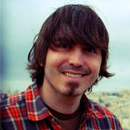
Brandon Gregory, who serves as a volunteer for the worship and missions teams at Church of the Resurrection, wrote today's Insights. He helps lead worship at Leawood's modern worship services, as well as at the West and Downtown services, and is involved with the Malawi missions team at home.
Think quick—what does a rich person look like? Most of us envision someone with expensive clothes, a yacht, a summer home in the south of France, and a private jet to get them there. When Jesus talks about “the rich” or a “wealthy man,” we don’t think it’s someone who looks like us. After all, most of us don’t even have summer homes in Missouri, let alone private jets—how could he be talking about us?
When I was young, just out of college, I heard a pastor say, “If two men pray for bread, and he gives one man two loaves and the other none, has he answered their prayers?” I loved that idea—until God gave me two loaves of bread. And then several more. Now, I have online accounts where I store my bread and loan it out to businesses who give me more bread. I like my bread.
The younger me would have been appalled, despite the present me giving a good amount of my income to others. But back then, the younger me wouldn’t have admitted that even he, an underemployed recent college graduate, had more than two loaves of bread. The younger me, who gave none, could have given some, and that’s a lesson the present me needs to learn.
For most of us, there are other people who look at our lives and wish for the privileges we have. Most of us have roofs over our heads and food on our tables. Many of us have cars. Our taxes pay for traversable roads, mail delivery, and public safety. These are all privileges that others don’t have. My purpose here is not to make anyone feel guilty for having the slightest bit of disposable income; it’s to remind us that Jesus’ words about wealth and greed apply to all of us. We can all learn from Jesus’ parable of the man who hoarded his grain.
Most of the time, I view generosity as a daily vitamin: I know it’s good for me, but I don’t like thinking about it, so I take it once a day and forget about it. Generosity is supposed to be a holistic part of our lives, more like general health and fitness. Even when I take my daily vitamin, I can be eating healthier, squeezing in a little bit of exercise, or reading to exercise my brain. In the same way, generosity isn’t limited to a monthly auto-deduction from my bank account. I can work to save so I have more to give. I can make one-time donations to causes that I like. I can research causes in need so I know where to give. Instead of thinking of what I’ve done, I can ambitiously be looking at what more I can do, not because I feel guilty, but because I believe the world can be better and I want to be a part of that better world.
