
Due to potentially damaging weather this afternoon and evening, the children’s musical and pre-show events in the Leawood Sanctuary have been cancelled and will be rescheduled.
Scheduled programming has resumed for Thursday, February 13 at all Resurrection locations.

8 If we claim, “We don’t have any sin,” we deceive ourselves and the truth is not in us. 9 But if we confess our sins, he is faithful and just to forgive us our sins and cleanse us from everything we’ve done wrong. 10 If we claim, “We have never sinned,” we make him a liar and his word is not in us.
2:1 My little children, I’m writing these things to you so that you don’t sin. But if you do sin, we have an advocate with the Father, Jesus Christ the righteous one. 2 He is God’s way of dealing with our sins, not only ours but the sins of the whole world. 3 This is how we know that we know him: if we keep his commandments.
1 John went to a group facing a serious spiritual issue. Verses 8 and 10 described different attitudes. “The verb [in verse 8] refers to inner possession and shows a person to be in a certain condition, or to have a certain emotion, which influences him continually. Thus ‘to have sin’ means one has the source and principle of sin in oneself and is continually dominated by it…. [Verse 10] states that ‘we’ have never actually done anything sinful and consequently are free from the resulting guilt.” *
Lord Jesus, you were a healer, whether the illness and its healing were physical or spiritual. I sometimes need both, and so does the world around me. Thank you for your healing sacrifice. Amen.
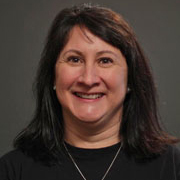
Denise Mersmann, who serves as the Care Coordination Director for the church wide Care Central department at Church of the Resurrection, wrote today's Insights.
As a parent, I wanted my kids to always know that no matter what they did, I was there for them. The one thing that I was not okay with was when they denied their actions and refused to take responsibility.
They are adults now, but this remains true. I may not love their actions, and I may be frustrated or disappointed, but I will love them just as much as ever. I will always forgive their wrongdoing and support them as they make amends and move forward. No matter what. It was, and is, important to me that they know they can trust me to always be there regardless. In my mind, my kids coming openly willing to share their misdeeds is a show of trust, after all.
My husband and I were pretty clear about our family guidelines. In fact, our family values are printed and posted on our fridge. They are simple and general, but they cover the standards that we hope to uphold individually and as a family. As I reflect on how important it was to me that our kids followed our family guidelines, I think about about how God must feel when I fail to follow his principles. I mean, his directives are pretty clear, also.
How often do I allow myself to skirt around the rules? To deny my bad behavior or find a reason that what I did was not quite as bad as it seems? Or maybe I just ignore it and hope that no one ever finds out?
What must God think about me when I do that? How can I truly say that I love God and trust Him if I can’t come to Him with my worst behaviors?
The sins I commit, the mistakes I make are certainly nothing to be proud of, but we have a God who loves us more that our worst misstep. He is there no matter what, and He is waiting for us to come to Him do he can show us the true depth of His love.
Isn’t that what every parent should want to do for their child?
* C. Haas, M. De Jonge, J. L. Swellengrebel, A Handbook on the First Letter of John. United Bible Societies, 1972, p. 30-32.
** Wright, N. T., Early Christian Letters for Everyone (The New Testament for Everyone) (p. 146). Westminster John Knox Press. Kindle Edition.
*** Ibid., p. 147.
