
Due to potentially damaging weather this afternoon and evening, the children’s musical and pre-show events in the Leawood Sanctuary have been cancelled and will be rescheduled.
Scheduled programming has resumed for Thursday, February 13 at all Resurrection locations.

As far as east is from west—that’s how far God has removed our sin from us.
People brought to [Jesus] a man who was paralyzed, lying on a cot. When Jesus saw their faith, he said to the man who was paralyzed, “Be encouraged, my child, your sins are forgiven”… The man got up and went home.
“While [the prodigal son] was still a long way off, his father saw him and was moved with compassion. His father ran to him, hugged him, and kissed him.
In a world quick to repay offense with offense, where power often looks like dominance or control, the apostle Paul offers us a subversive truth: “Don’t be defeated by evil, but defeat evil with good” (Romans 12:21). In this call, we glimpse the very heart of Jesus, who refused to mirror the violence and pride around him. Jesus calls us to a quieter, deeper strength. When Peter drew his sword in fear, Jesus told him to put it away. When questioned by Pilate, Jesus didn’t argue for control—he bore witness to a kingdom not of this world. His power wasn’t shown in domination, but in surrender, forgiveness, and peace. His path—one of compassion, humility, and fierce love—became the truest expression of divine power.
Take a quiet moment for yourself. Let your breath slow. Click here to reflect on the stained-glass window at Resurrection Leawood. Find the sword transformed into a plowshare in the lower right corner of the window. That image is more than artistry—it’s gospel. It reminds us that God’s power is not about bending others to our will, but about being transformed ourselves. Christ doesn’t call us to crush our enemies, but to relinquish the need to have enemies at all.
The apostle John reminds us: “This is how we will know that we belong to the truth and reassure our hearts in God’s presence. Even if our hearts condemn us, God is greater than our hearts and knows all things” (1 John 3:19-20). Overcoming evil begins not with what we do to others, but with what we allow God to do in us. When we trust God’s love to shape our identity—beyond shame and fear—we can respond to the world from a place of strength rooted in grace.
So instead of retaliation, what if you chose silence over sarcasm in a tense conversation? What if you removed yourself from a gossip thread instead of fueling it? These quiet acts of goodness may seem small, but they bear eternal weight. They reveal a different kind of strength—the kind that reflects the kingdom of God.
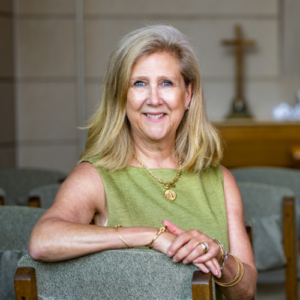
Debbie Dellinger, who serves as an Intern of Connection and Care at Resurrection, wrote this week's prayer tip.
