Day 3
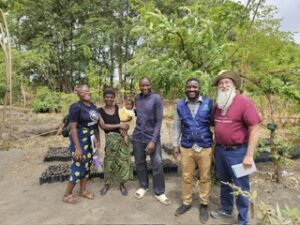
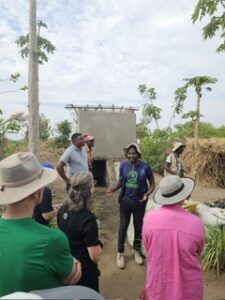
Our Monday morning started very differently than most of our “regular” days: rather than fighting traffic to get to our office or preparing lunches for our family, we headed out to a “model farm” to meet local Malawi farmers who have adopted the strategies and ideas of permaculture to transform their own farming practices. We met a local chief who owns an ancestral land plot, which he and his family have evolved to be more productive in food output and variety, using water and land parcels more efficiently, and thus supporting more families. We saw how they are using a compost toilet system to eliminate odor and pests while also developing high-quality manure that enables them to avoid using cost-prohibitive fertilizers for their crops. We saw many other practical applications of permaculture at this farm such as adoption of new plant varieties to provide a steady source of different types of nutritional value as well as practical sources of shade and soil enrichments. As a result of these adopted practices, multiple families now have secure access to food and even have sellable crops and products. The farmers we met are also sharing land for scalable production and serving as models for others in their areas.
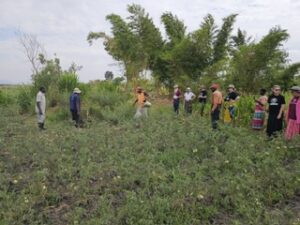
We then visited with family farms and garden plot farmers, who showed us how they have applied permaculture practices in big and incremental ways to transform dry, barren ground into usable gardens, farming land and, for most, production sources for sellable and shareable produce. Families have moved from food insecure to having access to a variety of foods and, for many, even sellable products. We saw the pride and joy of families—men and women included—who can now better provide food and nutrition for their families as well as produce sellable items and improve their neighbors’ access to fresh food.
Throughout the afternoon, we visited and learned more about the local seed bank and other sustainable and scalable practices aimed at improving individual families’ food security and the collective power to change communities through this work.
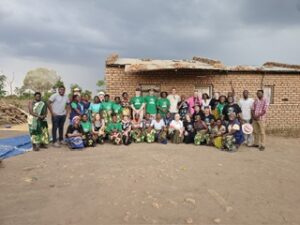
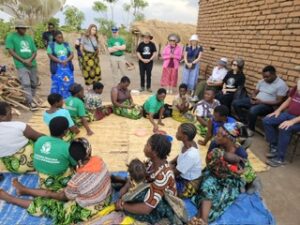
Our afternoon was also focused on learning more about and seeing the impact of small business investment through Opulence’s work toward economic empowerment. Through local small business investment clubs, collective tools and support have empowered many small businesses to form, take root, and grow. We visited with a group of women who each have some role in small businesses development and support through such a local club. Women shared stories of how they have learned business practices, have started businesses and how they are now growing their businesses, providing access to income for their families and their communities. The scale of this local impact is tremendous, and we heard first hand the stories of impact at the personal level: sending children to school, including medical school, women providing income to support their families and their own development. We saw the smiles as women described their pride in achievement and their aspirations for the future.
Today, we saw multiple stories of impact from the many tools and programs the Opulence team is implementing to support communities and families in their economic and social development, for sustainable and healthy futures. At the personal level, we met individuals as we crisscrossed the Malawi countryside who are changed because of this work. We learned that COR’s Christmas Eve offering has made much of this possible. And we are honored and humbled that we belong to a church family that has this level of impact across the globe. We saw the real-world impact first hand across dozens of men, women and children across the globe in the country of Malawi. The difference we are making as a church family by supporting sustainable knowledge, skills, and practices is tremendous. The measurement of this impact is not possible—beyond the economic shifts this work is supporting are the real-world growth stories of how communities are changed one person at a time. And we saw joy—authentic joy expressed as smiles, songs, dancing and enthusiasm, among the people touched by this effort. There is much more to do, but such a great seed has been planted and is being nurtured.